Climate Change
The Issue: Global seafloor exploration reveals diverse deep-sea ecosystems, but their sensitivity to climate change remains uncertain. Beyond biodiversity conservation, the combined impacts of climate change and resource exploitation (e.g., fishing, extraction of minerals and hydrocarbons) on deep-sea ecosystems and services require attention.
Synergies across marine, climate, geoscience and economic disciplines highlight the vulnerability of the deep-sea to climate change. Evidence shows climate forces affecting deep-sea ecosystems, from storms to ocean oscillations, especially in ecological hotspots like seamounts, ridges, and canyons. Models predict climate-driven effects on ocean biogeochemistry (deoxygenation, acidification, carbon flux changes). Areas with human activities and increased vertical ocean mixing, e.g., seamounts and canyons, are particularly sensitive, emphasising the importance of climate considerations in environmental management and conservation.
The Working Group: The DOSI Climate Change Working Group (with over 290 members) seeks to centralise data on the impact of climate change on deep-sea ecosystems, and address cumulative stressors. The goal is to facilitate integration of this information into environmental impact assessments, management plans, and Marine Protected Area design. The group strives to identify vulnerable areas and foster interdisciplinary research on how deep-sea ecosystems interact with climate. They emphasise a need for experimental and theoretical support, to enhance predictive models for this vital but often overlooked part of the Earth system. Additionally, the Working Group communicates deep-ocean climate science to various international organisations and policy makers through presentations, policy briefs, webinars, and publications.
Policy and Outreach
- UNFCCC Engagement: Supporting delegates with DOSI policy briefs and insights at key events like the annual Intersessional SB, Ocean Dialogue and COP. The next COP is COP30 in Brazil).
- Policy Brief Series:
Research and Analysis
- Analysis of deep-sea climate science gaps identified in IPCC AR6.
- Analysis of mCDR environmental risks.
- Past analysis of submissions to the UNFCCC Ocean and Climate Change Dialogue. Executive Summary
- Development of a deep-sea climate change bibliographic database, indexed by region, stressor, and ecosystem.
Advocacy and Awareness
- Enhancing public awareness via blogs, media and webinars.
Participation in UNFCCC Intersessional Ocean Dialogue and COP.
Collaborating with platforms like the IPCC Oceans, CBD, SDG14, and the Oceans and Climate Platform.
Development of a Deep-Sea Climate Change Reference Library
We are creating a Zotero-based bibliographic database to centralise and index research on deep-sea climate change, categorised by region, stressor, ecosystem, and species. This resource supports researchers, policymakers, and managers in understanding and addressing the impacts of climate change on deep-sea ecosystems.
Formation of the Deep Ocean Climate Intervention Impacts (DOCII) Subgroup
The DOCII subgroup focuses on the interaction of marine carbon dioxide removal (mCDR) methods with the deep ocean. It assesses carbon removal efficacy, environmental risks, governance issues, and research needs. Through workshops, reviews, white papers, and collaborations, DOCII aims to bring deep-sea science into mCDR deliberations and inform relevant communities. The first paper from the DOSI-Beniorr mCDR workshop held in June 2024 is available here.
Read the research paper produced following the 2024 workshop, Illuminating deep-sea considerations and experimental approaches for mCDR proposals.
Policy Briefs:
Incorporating Deep-Ocean Biodiversity into Climate Change Policy
Considerations for deep-sea environmental impact research on marine Carbon Dioxide Removal
Marine Carbon Dioxide Removal: Ocean Impacts and Policy Needs
- Climate Change and Biodiversity Beyond National Jurisdiction
Exploring deep ocean climate interventions, including:
Publications:
- Lidström et al. Deep differences: expanding the marine social sciences and humanities into the deep ocean. npj Ocean Sustainability.
- Williams et al., 2026 The biosphere in the Anthropocene. Philos Trans R Soc Lond B Biol Sci.
- The deep-sea and the Arctic must be included in efforts to tackle climate change.
- Illuminating deep-sea considerations and experimental approaches for mCDR proposals.
Identifying Deep Ocean Science Gaps for Understanding and Monitoring Climate Change
Current Perceptions of the Ocean-Climate Nexus: An analysis of UNFCCC submissions.
Ocean Decade White Paper: Unlock Ocean-Based Solutions to Climate Change.
2026
- DOSI Ambassadors participated in the UNFCCC SB64 in Bonn. Sonigitu Ekpe led the delegation for DOSI (University of Southampton badge), and Natalya Gallo (Working Group co-lead) joined the Norwegian delegation. Natalya delivered the official oral and written intervention on behalf of RINGO, UiB and DOSI during the second day of the Ocean and Climate Change Dialogue in plenary at SB64. RINGO is an umbrella organisation representing observer NGOs, including DOSI, recognised by UNFCCC. The intervention called for alignment of activities across conventions (UNCLOS, CBD, BBNJ and human rights treaties), as well as across global assessments (IPCC, IPBES, WOA), exercising the precautionary principle,
considering diverse research in decision making, and financing ocean-based solutions. - The Climate Change Working Group hosted a workshop for 37 participants titled “Assessing Cumulative Impacts on Deep-sea Communities” in the week preceding the Ocean Sciences Meeting in Glasgow. The workshop brought together experts from several DOSI Working Groups, including Minerals, Offshore Energy, Pollution and Fisheries, covering expertise in various fauna, geographical locations and industries to discuss the concept and applicability of cumulative impact assessments in the deep sea, which traditionally have been developed for shallow-water ecosystems. Participants synthesised current evidence on multiple pressures affecting deep-ocean ecosystems, developed a pressure-receptor linkage framework and conducted expert-based vulnerability assessments to identify key knowledge gaps and research priorities. Discussions were intense and productive, and the outputs (in prep.) will provide an important foundation for improving cumulative impact assessments in the deep ocean.
2025
- DOSI mobilised a delegation for the UNFCCC COP30, which was held in Belem, Brazil. Narissa Bax and Juliano Palacios attended in person, with Lisa Levin attending remotely. Additional DOSI members were also present in Belem on different delegations. Once again, DOSI raised awareness of the deep ocean’s role in climate regulation, its vulnerability to climate change, and the impacts of some mitigation solutions such as mCDR. It was also an important mission to highlight and discuss links between biodiversity and climate, and promote cross-fertilisation among UN instruments. DOSI Ambassadors observed and contributed to formal discussions, engaged with delegations from multiple countries, provided input for RINGO statements in plenaries and made a well-received intervention on behalf of DOSI during the Ocean Dialogue. They also spoke at sessions (e.g. Cryosphere Pavilion). DOSI Policy Briefs and Information Sheets on deep-ocean knowledge gaps, environmental impact research, and climate change were distributed to delegates, as was the app: “How much deep-sea is in your EEZ”. However, it was felt that there was less focus on the ocean than in previous years. Also, it was noted that there was a concerning lack of diversity among Ocean Pavilion panellists, and DOSI feels there is an opportunity to ensure increased
diversity and depth in the future. - DOSI had a stand at the UNFCCC Virtual Ocean Pavilion for COP30, which was staffed by
Working Group members. We also hosted a live-streamed event via the VOP, titled “Climate Change
Mitigation and Deep-Sea Biodiversity: Risks and Opportunities”, which was well-attended. Watch the
recording here. DOSI also hosted a second roundtable event during the conference on “Opportunities in the
BBNJ Agreement for advancing climate action in the deep ocean”. Watch the recording here.
2024 and earlier
- Supported the UN World Ocean Assessment II with critical deep-sea insights.
- We attended COP29 to discuss the importance of recognising the deep sea in climate discussions:
- Our team attended the 28th UN Climate Change Conference to support delegates with the following information:
- Incorporating Deep-Ocean Biodiversity into Climate Change Policy (DOSI Policy Brief)
- Marine Carbon Dioxide Removal: Ocean Impacts and Policy Needs (DOSI Policy Brief)
- Identifying Deep Ocean Science Gaps for Understanding and Monitoring Climate Change (DOSI Information Sheet)
Learn more about the past activities of the Climate Change Working Group here.
-
Collaborate with us to advance deep-sea climate science. Engage in meetings, contribute to policy briefs and publications, and participate in international events.
WG members are encouraged to actively engage with WG communications and meetings, as these are where further information will be provided on workshops, outputs such as policy briefs and publications, as well as event attendance. Please note: DOSI Ambassadors who are involved key meetings are selected according to our DOSI internal policy and at the discretion of the WG leads.

Working Group Leads



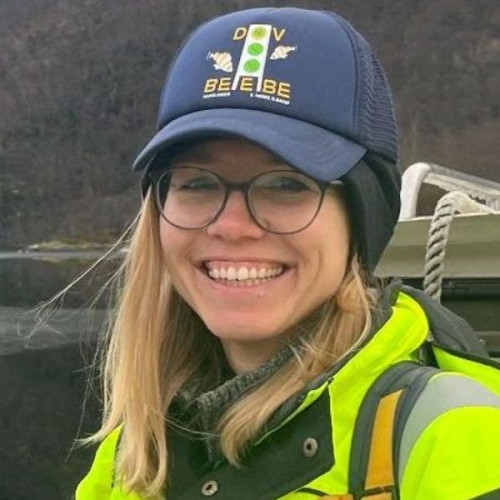
Michelle Guraieb Casis
Scripps Institution of Oceanography and Ocean Discovery League, USA